
- 科目一考试
- 顺序练习
- 随机练习
- 强化练习
- 模拟考试
- 科目四考试
- 顺序练习
- 随机练习
- 强化练习
- 模拟考试
- 外国语言版题库
- 英语题库
- 德语题库
- 韩语题库
- 日语题库
- 俄语题库
- 法语题库
- 西班牙语题库
- 阿拉伯语题库
- 摩托车英文题
山西英文驾考科目4
-
1、When the wounded person is suffering main artery bleeding, where should the rescue personnel press by thumb to stop the bleeding?
A、The artery near the heart
B、The artery lower to the wound
C、The artery further from the heart
D、The artery in the center of the wound
Answer:A
2、What should the driver do when the motor vehicle encounters this situation?

A、Overtake immediatel
B、Sound the horn continuously to warn
C、Maintain safety distance and overtake
D、Sound horn and speed up to overtake
Answer:C
3、Mr Li drove a large bus with 21 passengers( capacity 35 people). He found the braking system was abnormal on the way but failed to repair it. When running on the Shuangdao Haiwan Bridge at a speed of 50 kilometers per hour(speed limit 40 km/h), the bus fell into the sea due to a braking system failure, killing 13 people and injuring 8. What's the main illegal act committed by Mr Li?
A、Speeding
B、Fatigued drivin
C、Carrying more passengers than permitted
D、Driving a motor vehicle with potential safety hazard
Answer:AD
4、The sign on the right warns that the road will narrow over the next 5 kilometers.

Answer:Y
5、The sign on the right warns of right-hand S-shaped bend ahead.

Answer:N
6、What should the driver do when seeing these hand signals?

A、Go straight and pass through the intersection
B、Stop and wait
C、Turn right at the intersection
D、Turn left at the intersection
Answer:B
7、The slow-down-and-yield line at the intersection ahead indicates that vehicle drivers should stop and give the right of way to vehicles on the trunk road.

Answer:N
8、The sign on the right warns of a one-way tunnel ahead.

Answer:N
9、Rescue personnel should check the breath of the unconscious person before applying any other emergency treatment.
Answer:Y
10、When steering failure happens to a fast moving motor vehicle, what should the driver do?
A、Apply emergency braking
B、mmediately change to a low gear
C、Reasonably use the driving brake and the stopping brake and refrain from applying emergency braking
D、Turn on the hazard lamps
Answer:BCD
11、What kind of harmful effect will be brought about by continuously using the foot brake on a long downhill road?
A、Shorten the engine's service life
B、Make the driver feel tired
C、Easily cause the vehicle to overturn
D、Reduce the braking efficiency
Answer:D
12、The area in the yellow rectangle markings on the right side of the road indicates that temporary stopping is permitted here.
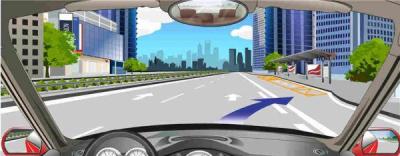
Answer:N
13、When rescuing a person sustaining full-body burns the rescue personnel may spray cool water to his body to put out the fire.
Answer:Y
14、When a motor vehicle slides sideways on a road covered by ice and snow, the driver should violently turn the steering wheel to adjust the direction.
Answer:N
15、Which of the following acts are prohibited when passing through a tunnel?
A、Overtaking
B、Stopping
C、Making a U-turn
D、Reversing
Answer:ABCD
16、When encountering such a situation, motor vehicle drivers should take the left lane.

Answer:N
17、When following a vehicle on the road, the distance from the vehicle in front is not important. As long as the driver goes forward at the same speed as the vehicle in front does, he/she can avoid a rear-end collision.
Answer:N
18、The sign in front indicates a 2-kilometer distance from the destination of the highway ahead.

Answer:Y
19、How many kinds of law-breaking acts are displayed in flash 3?

A、One
B、Two
C、Three
D、Four
Answer:B
20、It is correct for the driver to drive on an expressway in the way shown in the flash.

Answer:N
21、When a motor vehicle slides sideways, how should the driver adiust the direction?
A、If the front wheels skid sideways, turn the steering wheel in the direction of the skid
B、If the front wheels skid sideways, turn the steering wheel in the opposite direction of the skid
C、If the rear wheels skid sideways, turn the steering wheel in the direction of the skid
D、If the rear wheels skid sideways, turn the steering wheel in the opposite direction of the skid
Answer:BC
22、Those traffic police signals mean turning right.

Answer:N
23、When fixing the unexposed bones in position, it is necessary to exceed the upper and lower joints of the wounded body part.
Answer:Y
24、When a tire suddenly bursts on the road, the driver should violently depress the brake pedal to reduce speed and stop the vehicle.
Answer:N
25、The sign on the right warns of a non-motor vehicle lane.

Answer:N
26、What's the meaning of the sign on the right?

A、Long-time parking permitted
B、Temporary parking permitted
C、Long waiting for passengers permitted
D、No parking
Answer:B
27、When driving in rain and encountering pedestrians with umbrellas or wearing raincoats, what should be done by motor vehicle drivers in order to yield?
A、Drive at a normal speed
B、Sound the horn to alert when approaching the pedestrians
C、Speed up and bypass on the left
D、Reduce speed and sound the horn in advance
Answer:D
28、When encountering this situation in a residential area the driver should sound the horn continuously.

Answer:N
29、What should the driver do when the motor vehicle passes a flyover?

A、Speed up and pass rapidly
B、Keep the speed under 15 km/hour
C、Drive at the speed indicated by the traffic sign
D、Drive close to the central line of the flyover
Answer:C
30、How to pass the intersection when running straight

A、turn on the hazard lights and pass
B、directly speed up and pass straight
C、yield to the vehicle from the right road
D、yield to the vehicle from the left road
Answer:C
31、The solid yellow line on the curb indicates that temporary stopping or parking is allowed at the roadside.

Answer:N
32、Motor vehicles are prohibited from turning left in this situation.

Answer:Y
33、After a tire bursts and before the driver can control the speed of the vehicle, he/she should not risk using the foot brake to stop the vehicle. Otherwise, a horizontal swing of the vehicle can cause greater danger.
Answer:Y
34、When a motor vehicle breaks down and has to be stopped on the highway, what should the driver do?
A、Set up a breakdown warning sign 150 meters behind the vehicle
B、Set up a breakdown warning sign 100 meters behind the vehicle
C、If it happens at night, turn on the clearance lamp and rear position lamp
D、Turn on the hazard lamps
Answer:ACD
35、When encountering a road like this, motor vehicle drivers may make good use of neutral gear to coast.

Answer:N
36、The sign in front indicates a one-kilometer distance from the next left exit.

Answer:N
37、Under such circumstances, what should motor vehicle drivers do?

A、Guard against the sideslip of motor vehicles
B、Guard against the crossing of pedestrians
C、Speed up and pass through as quickly as possible
D、Continuously sound the horn
Answer:B
38、The motor vehicle may promptly overtake the vehicle in front from the left side in this situation.

Answer:N
39、The sign on the right indicates a 2-kilometer distance from the Donglushan Service Area on the highway.

Answer:Y
40、What should the motor vehicle driver do when the motor vehicle encounters the crosswalk in thissituation?

A、Slow down and pass
B、Speed up and pass
C、Sound the horn and pass
D、Stop immediately
Answer:A
41、Drivers may turn left when traffic police give these hand signals.

Answer:N
42、How should the driver use vehicle lights when the motor vehicle leaves a roundabout?

A、Turn on the left-turn indicator
B、Turn on the hazard lamps
C、No need to turn on any indicators
D、Turn on the right-turn indicator
Answer:D
43、The sign on the right warns of a guarded railway intersection ahead.

Answer:N
44、Where is the proper parking place for motor vehicles driving on an expressway?
A、On the expressway ramp
B、In the acceleration lane
C、In the deceleration lane
D、In a service area
Answer:D
45、When driving on a long downhill road, which is the best way to control driving speed?
A、Coast in neutral gear
B、Depress the clutch and coast
C、Use the engine to brake
D、Depress the brake pedal continuously
Answer:C
46、What should the driver do in case the public bus suddenly pulls out from this bus station?

A、Stop behind the public bus
B、Overtake the public bus rapidly
C、Slow down and overtake the public bus slowly
D、Sound the horn continuously to warn the public bus
Answer:C
47、A motor vehicle should not pass the level crossing rapidly in this situation.

Answer:Y
48、How should a motor vehicle follow the other vehicle In front when driving on a road covered with ice and snow?
A、Keep a long safe distance
B、Turn on hazard lamp
C、Change between high-and-low beam alternatively
D、Sound the horn in due time to give a notice to the vehicle in front
Answer:A
49、Motor vehicles should stop and yield rapidly when encountering this situation at a bus station.

Answer:Y
50、Under such circumstances, motor vehicle drivers should stop and yield

Answer:Y
- 山西英文驾考科目4 相关内容
- 内蒙古英文驾考科目4 江西驾考英文版题库 外国驾照考试科目有哪些项目 外国人学驾照需要些哪样证件和材料 西藏科目一考题英文版 新疆驾考科目四英语版PDF 甘肃驾考科目一英语版PDF题库 安徽驾考英文版题库 外国籍考驾照难吗 云南英文驾考科目四app 广东英文驾考书 山东科目一考题英文版 内蒙古科目四英文版练习题库 辽宁2025科目一考试英文 北京科目四英文版 广东驾考英文版题库
Copyright © 2025 驾考 版权所有