
- 科目一考试
- 顺序练习
- 随机练习
- 强化练习
- 模拟考试
- 科目四考试
- 顺序练习
- 随机练习
- 强化练习
- 模拟考试
- 外国语言版题库
- 英语题库
- 德语题库
- 韩语题库
- 日语题库
- 俄语题库
- 法语题库
- 西班牙语题库
- 阿拉伯语题库
- 摩托车英文题
科目四英文版模拟
-
1、The broken white line on the right side of the road indicates that drivers are allowed to change lanes by crossing the line.

Answer:Y
2、The sign in front indicates a one-way lane after turning right.

Answer:Y
3、It is safest for a motor vehicle driver to overtake the vehicle in front from its righthand on this kind of road.

Answer:N
4、The sign on the right warns of traffic signals ahead.

Answer:Y
5、Under such circumstances, what should be done bY motor vehicle drivers in order to yield to the pedestrians politely?

A、Set off after pedestrians pass
B、Set off and bypass in front of the pedestrians
C、Sound the horn to warn the pedestrians to yield
D、Set off and approach the pedestrians slowly
Answer:A
6、The sign on the right indicates a bypass route at the intersection ahead.

Answer:Y
7、When driving on a road covered with ice and snow, drivers tend to encounter glare caused by reflection of light rays from the road surface.
Answer:Y
8、Motor vehicle drivers may make a U-turn in this area as long as it will not affect the passing of pedestrians.

Answer:N
9、The sign in front indicates a 4-kilometer distance from the next exit.

Answer:Y
10、The guide line of a changeable lane indicates that drivers can choose their direction at will.

Answer:N
11、vehicles may stop temporarily in this area.

Answer:N
12、Before a motor vehicle enters a tunnel, the driver should adjust the speed in accordance with the indication of the traffic sign at the entrance of the tunnel.

Answer:Y
13、When driving in rain or snow, the driver should turn left to stabilize the vehicle if the motor vehicle slides to the right side.
Answer:N
14、Before making a U-turn at the intersection ahead, motor vehicle drivers should drive to the lane for turning left and going straight.

Answer:N
15、When a motor vehicle breaks down and has to be stopped on the highway, what should the driver do?
A、Set up a breakdown warning sign 150 meters behind the vehicle
B、Set up a breakdown warning sign 100 meters behind the vehicle
C、If it happens at night, turn on the clearance lamp and rear position lamp
D、Turn on the hazard lamps
Answer:ACD
16、Drivers may go ahead when traffic polices posture is like this.

Answer:Y
17、When driving a motor vehicle equipped with power steering, the driver should firmly hold the steering wheel and drive slowly if he/she suddenly finds that steering is difficult.
Answer:N
18、When driving onto the left lane, motor vehicle drivers are allowed to make a U-turn.

Answer:Y
19、The area in the yellow rectangle markings on the right side of the road indicates that temporary stopping is permitted here.
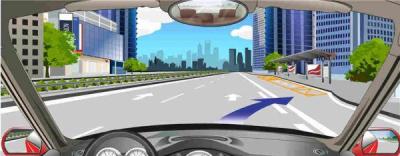
Answer:N
20、Motor vehicles should stop and yield rapidly when encountering this situation at a bus station.

Answer:Y
21、Before setting off, it is necessary to check the driving cabin, engine cabin, external and tires of the motor vehicle.
Answer:Y
22、Mr. He drove his large bus with 53 passengers (permitted carrying capacity 47) to 454 km mark by 100m along the Yining-hefei Expressway in Nanjing jurisdiction, where he was tailgated by a heavy-type semitrailer tractor. The bus left the road, breaking through the guardrail and catching fire. 17 people were killed and 27 injured. Which of the following law-breaking acts did Mr. He commit?
A、Speeding
B、Exceeding the carrying capacity of the motor bus
C、Driving a motor vehicle overdue for annual inspection
D、Improper operation
Answer:B
23、What should be done by drivers in order to drive safely on the road in this condition?

A、Make a large turn on the left side of the road
B、Make a turn on the central line of the curve
C、Make a small turn on the right side of the road
D、Make a turn by borrowing the opposite lane
Answer:C
24、When a motor vehicle on an expressway stops in an emergency due to breakdown or an accident, what should the driver and the passengers do?
A、Stand in front of the motor vehicle
B、Wait in the motor vehicle for rescue
C、Stand behind the motor vehicle
D、Promptly move to the road shoulder on the right side or the emergency lane
Answer:D
25、During normal driving, the driver should do his/her best to run close to or on the central line so as not to allow oncoming vehicles any opportunity to occupy his own route.
Answer:N
26、When encountering this situation at the gate of a school, the driver should prepare to stop.

Answer:Y
27、The motor vehicle should slow down and pass slowly in this situation.

Answer:Y
28、What should drivers do when encountering a rainstorm on a common road and the windscreen-wiper fails to make sight clear?
A、Drive at a reduced speed
B、Drive carefully
C、Cut speed in time and pull over
D、Drive at a normal speed
Answer:C
29、had a head-on collision at the speed of 40 kilometers per hour with Mr. Wangs three-wheeled freight motorcycle carrying 19 passengers, killing10 people nd injuring 9. What are the main illegal acts committed by the two drivers?
A、Mr Ye drove an unpermitted vehicle type
B、Mr. Wang drove a freight motorcycle to carry passengers
C、Mr Ye exceeded the speed limit
D、Mr. Wang failed to follow the guidance of the traffic signal lights
Answer:BC
30、When there is a braking failure on a downhill road, what should not be done by the driver?
A、Steering the motor vehicle to the uphill direction
B、Stopping the vehicle by rubbing the vehicle body against the rocks or trees on roadside
C、Driving to the emergency lane and stop the vehicle there
D、Pulling up the stopping brake or change the gear to two positions lower
Answer:D
31、When encountering such a situation, the motor vehicle driver should change to the left lane rapidly.

Answer:N
32、When encountering this situation in a residential area the driver should speed up and pass in front of the bicycle.

Answer:N
33、The sign on the right indicates an inspection station 100 meters ahead.

Answer:Y
34、The sign on the right warns of no passing due to collapse on the road ahead.

Answer:N
35、When there is a braking failure on a downhill road the driver should change the gear to one position or two positions lower, and control the speed by taking advantage of the braking role of the engine.
Answer:Y
36、Mr. Qi drove a large bus with 28 passengers(capacit 55 people). When arriving at an intersection without any traffic signals from south to north at a speed of 50 kilometers per hour, the bus had a side collision with Mr. Li's heavy semi-trailer tractor (capacity 40 tons and carrying 55.2 tons) running from east to west. As a result of this accident, 12 people were killed and 17 injured. What are the main illegal acts in this case?
A、The bus carried more passengers than capacity
B、The bus exceeded the speed limit
C、The tractor carried more cargo than capacity
D、The driver of the tractor was inexperienced
Answer:BC
37、A motor vehicle may stop and yield if it encounters any problem when changing to the driving lane from an acceleration lane.
Answer:N
38、Drivers may cross these central solid and broken yellow lines when overtaking.

Answer:N
39、When a motor vehicle accidentally hits a guardrail of a highway, the driver should stabilize and adjust the steering wheel properly, and refrain from turning the steering wheel drastically.
Answer:Y
40、Under such circumstances, motor vehicle drivers lould follow the vehicle in front and drive into the Intersection to wait.

Answer:N
41、After a motor vehicle enters the ramp from an expressway, it should reduce its speed below the prescribed speed limit.
Answer:Y
42、In the flash, it is correct for the driver to behave this way when there is a traffic jam caused by an accident on the expressway.?

Answer:N
43、What should be done by the driver who intends to overtake but the motor vehicle in front neither reduces its speed nor allows the right of way?
A、Continuously sounding the horn and accelerating to overtake
B、Accelerating and continuing to overtake
C、Refraining from overtaking
D、Following the vehicle in front closely and finding a chance to overtake
Answer:C
44、When a motor vehicle deviates from the normal direction due to steering failure, what should the driver do?
A、Immediately steer and adjust
B、Reduce speed and stop the vehicle as early as possible
C、Steer to the side where there is no obstacle to evade
D、Steer to the side where there is an obstacle to evade
Answer:B
45、The sign above the tunnel indicates a height limit of 3.5 meters on the road ahead.

Answer:Y
46、In this situation, motor vehicles are permitted to stop temporarily at bus stations.

Answer:N
47、Under such circumstances, motor vehicle drivers should reduce speed by the right side swiftly and yield.

Answer:Y
48、The sign on the right warns for children on the section ahead.

Answer:Y
49、The sign in front gives information about the direction of road exits.

Answer:Y
50、The sign on the left indicates U-turn is allowed here.

Answer:Y
- 科目四英文版模拟 相关内容
- 浙江科目四考题英文版 广东驾考英文版题库 内蒙古驾照科目一英文版题库 甘肃驾考英语版PDF题库 湖北驾考英语版书 四川科目四英文版 辽宁科目四考题英文版 青海英语c1考试 天津驾考科目一英语版书 陕西科目四考试英文版 广东2025英文驾考PDF题库 山西科目四有英文版吗 上海英文考驾照用语 四川驾考科目四英语版PDF 青海考驾照科目四有英文版 上海科目一考试英文版
Copyright © 2025 驾考 版权所有