
- 科目一考试
- 顺序练习
- 随机练习
- 强化练习
- 模拟考试
- 科目四考试
- 顺序练习
- 随机练习
- 强化练习
- 模拟考试
- 外国语言版题库
- 英语题库
- 德语题库
- 韩语题库
- 日语题库
- 俄语题库
- 法语题库
- 西班牙语题库
- 阿拉伯语题库
- 摩托车英文题
广东2025科目四考题英文版
-
1、Under such circumstances, what should motor vehicle drivers do?

A、Guard against the sideslip of motor vehicles
B、Guard against the crossing of pedestrians
C、Speed up and pass through as quickly as possible
D、Continuously sound the horn
Answer:B
2、The guide arrow on the road surface of this lane indicates that only right turns are permitted at the intersection ahead.

Answer:N
3、When a motor vehicle passes over an overflowing bridge, what should the driver do after stopping and observing closely?
A、Change to a high gear and pass rapidly
B、Constantly observe the changes of the flow
C、Prepare to stop at any time
D、Change to a low gear and pass through at a constant speed
Answer:D
4、Drivers may cross these lane-dividing lines to change lanes in the same direction.

Answer:N
5、The sign on the right warns of a sharp winding road ahead.

Answer:N
6、What should the driver do when seeing these hand signals?

A、Go straight and pass through the intersection
B、Stop in front of the stop-line and wait
C、Turn left at the intersection
D、Drive at a lower speed at the intersection
Answer:C
7、This road marker indicates that the minimum speed for this road section is 60 km/hour.

Answer:N
8、The road marker on the right side indicates that drivers may overtake by borrowing this road.

Answer:N
9、When the tire pressure is too low, what will happen if the tire changes its shape in waves and increases in temperature due to fast movement?
A、Unstable tire pressure
B、Even lower tire pressure
C、Driving resistance increases
D、Tire burst
Answer:D
10、What should drivers do when encountering a rainstorm on a common road and the windscreen-wiper fails to make sight clear?
A、Drive at a reduced speed
B、Drive carefully
C、Cut speed in time and pull over
D、Drive at a normal speed
Answer:C
11、Rescue personnel should check the breath of the unconscious person before applying any other emergency treatment.
Answer:Y
12、What should the driver do when he/she sees this sign on the road?

A、Use emergency braking
B、Slow down and take a look
C、Sound the horn intermittently
D、Prepare to bypass
Answer:B
13、Mr. Wu drove a large bus with 33 passengers (capacity 22 people). At the spot of 7 kilometers mark by 300 meters on the No 163 County Road, the bus lost control and fell into a ravine. As a result of the accident, 10 people were killed and 21 injured. In accordance with the alcohol test after the accident the blood alcohol content of Mr Wu was 26 milligram per milliliter. What's the main illegal act committed by Mr Wu?
A、Speeding
B、Carrying more passengers than permitted
C、Fatigued driving
D、Driving after drinking
Answer:BD
14、Matches, sulfur and red phosphorus belong to which of the following dangerous chemicals?
A、Explosives
B、Oxidizing materials
C、Self-igniting articles
D、Inflammable solid materials
Answer:D
15、When encountering a school bus which stops at the right roadside and students are embarking or disembarking, and there is only one motor vehicle lane in each direction, motor vehicle drivers behind the bus should stop and wait.
Answer:Y
16、How many kinds of law-breaking acts are displayed in flash 3?

A、One
B、Two
C、Three
D、Four
Answer:B
17、The sign on the right indicates that overtaking is allowed on the section ahead.

Answer:N
18、At this intersection, motor vehicle drivers may directly make a U-turn along the U-turn turning lane.

Answer:N
19、The sign on the right indicates a one-kilometer distance from the ETC toll station.

Answer:Y
20、When there is bleeding at the bone fracture of a wounded person, the first thing to do is to fix the wounded part in position, then stop the bleeding and dress the wound.
Answer:N
21、The driver may not change lanes when the motor vehicle turns right at this intersection.

Answer:N
22、What should the driver pay attention to in this situation?

A、Pedestrians passing behind the vehicle
B、Pedestrians passing in front of the vehicle
C、Public buses suddenly reversing
D、Public buses suddenly setting off
Answer:B
23、When finding a tire suddenly burst on the road, the driver should firmly hold the steering wheel with both hands to ensure the vehicle goes straight.
Answer:Y
24、This sign warns that the section ahead is under traffic monitoring.

Answer:Y
25、The sign on the right warns that there are vehicles converging into the intersection on the right.

Answer:Y
26、When the motor vehicle stops on a downhill section how should the driver use the foot brake?
A、Earlier than on a level road
B、Later than on a level road
C、As timely as on a level road
D、Gently depress the foot brake pedal
Answer:A
27、When temporarily parking on a raining day, what kind of lamp should the driver turn on?
A、Front and back fog lamps
B、Hazard warning lamp
C、Headlamp
D、Reversing lamp
Answer:B
28、As shown in this picture, the vehicles intending to turn left are allowed to drive into the left-turn waiting area directly to wait for the green light.

Answer:N
29、The sign in front indicates a 4-kilometer distance from the next exit.

Answer:Y
30、When reversing in this condition, in which of the following ways can motor vehicle drivers keep safe?

A、Reverse at a lower speed
B、Voluntarily stop and yield
C、Continuously sound the horn to alert
D、Reverse in a clockwise direction
Answer:B
31、What's the most frequent problem for driving on a muddy road?
A、High resistance force
B、Sideways slide
C、The motor vehicle bumps
D、Steering failure
Answer:B
32、The sign on the right warns of a dangerous mountainside road ahead.

Answer:Y
33、What caused this drivers death in an accident?

A、Failing to fasten seatbelt
B、Positioned too close to the steering wheel
C、Failing to hold the steering wheel
D、Failing to turn on SRS
Answer:A
34、Under such circumstances, motor vehicle drivers may sound the horn at the proper time and speed up to pass through.

Answer:N
35、The sign on the right indicates a left-turn bypass route at the intersection ahead.

Answer:Y
36、When driving on the highway in foggy, rainy, or snowy weather with a range of visibility between 100 meters and 200 meters, what should motor vehicle drivers do?
A、Turn on the fog lamp, low-beam, clearance lamp and front and rear position lamp
B、Drive at a speed of no more than 60 km/hour
C、Keep a breaking distance of more than 100 meters from the vehicle in front in the same lane
D、Leave the highway from the nearest exit as soon as possible
Answer:ABC
37、In order to keep safe when driving on the highway, which ones of the following statements are prohibited acts?
A、Reversing, moving against regulations, making a U-turn by crossing the central divider, or stopping in the lane.
B、Riding or rolling on the lane-dividing line or driving on the shoulder
C、Overtaking on ramps, accelerations lanes, ordeceleration lanes.
D、Testing vehicles or learning to drive a vehicle
Answer:ABCD
38、When a motor vehicle deviates from the normal direction due to steering failure, what should the driver do?
A、Immediately steer and adjust
B、Reduce speed and stop the vehicle as early as possible
C、Steer to the side where there is no obstacle to evade
D、Steer to the side where there is an obstacle to evade
Answer:B
39、The sign on the right warns of a guarded railway crossing 100 meters ahead.

Answer:N
40、When passing an intersection, vehicle motor drivers are not allowed to overtake.
Answer:Y
41、Motor vehicle drivers may borrow a special lane for other vehicle types, if one exists, to overtake.
Answer:N
42、When encountering an emergency on a highway, the driver should not drastically turn to evade.
Answer:Y
43、What does this sign on the fly-over junction indicate?

A、Turn right
B、Drive straight or turn left
C、Drive straight or turn right
D、Take a U-turn under bridge
Answer:C
44、When driving on an expressway, which of the following statements is correct?
A、Drives are not allowed to drive by riding or rolling on the lane dividing line
B、Drivers are prohibited from driving on road olders
C、Drivers may overtake on the ramp, the acceleration lane or the deceleration lane
D、Drivers are prohibited from learning to drive
Answer:C
45、The sign on the right side indicates that turning left is not permitted at the intersection ahead.

Answer:Y
46、Under such circumstances, what should be done by the motor vehicle driver?

A、Overtaking the vehicle in front on its left
B、Overtaking by occupying the opposite lane
C、Overtaking the vehicle in front on its right
D、Following the vehicle in front
Answer:D
47、When a motor vehicle enters an expressway from the ramp, which of the following lamps should be turned on?
A、The left-turn indicator
B、The right-turn indicator
C、The hazard warning lamp
D、The headlamp
Answer:A
48、When running on an expressway with three lanes in each direction, which one of the following lanes is not appropriate for the motor vehicle to use if its speed ranges between 90 kilometers per hour and 110 kilometers per hour?
A、The far left lane
B、The middle lane
C、The far right lane
D、Any lane
Answer:A
49、The sign on the right indicates a 200-meter distance from the gas station ahead.

Answer:Y
50、The area in the yellow rectangle markings on the right side of the road indicates that temporary stopping is permitted here.
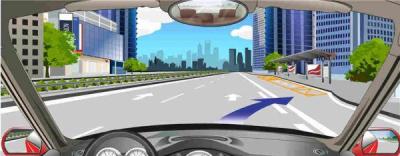
Answer:N
- 广东2025科目四考题英文版 相关内容
- 广东科目四考题英文版 吉林科目一考题英文版 安徽科目一有英文版吗 江苏英文版考驾照 浙江驾考科目一英文版题库 广东驾考科目四英语版PDF 黑龙江外国人考驾照科目一 贵州关于考驾照的英语 山东英文考驾照用语 浙江驾校考试英文版 外国驾照考试视频教学大全 重庆科目一英文版模拟 云南关于考驾照的英语 宁夏英文版驾考 江苏2025英文驾考PDF题库 陕西2025科目四英文版
Copyright © 2025 驾考 版权所有