
- 科目一考试
- 顺序练习
- 随机练习
- 强化练习
- 模拟考试
- 科目四考试
- 顺序练习
- 随机练习
- 强化练习
- 模拟考试
- 外国语言版题库
- 英语题库
- 德语题库
- 韩语题库
- 日语题库
- 俄语题库
- 法语题库
- 西班牙语题库
- 阿拉伯语题库
- 摩托车英文题
广西驾照科目四英文版题库
-
1、When fixing the unexposed bones in position, it is necessary to exceed the upper and lower joints of the wounded body part.
Answer:Y
2、Under this circumstance, motor vehicle drivers should not reduce speed.

Answer:N
3、The sign in front indicates a temporary parking lot on the right side of the highway.

Answer:N
4、The broken white reflective line on the road warns that drivers should drive at a lower speed on the road section ahead.

Answer:Y
5、When a motor vehicle breaks down and cannot be moved away from the expressway, the driver and all passengers should stay in the vehicle and wait for the rescue personnel.
Answer:N
6、What should the driver do when he/she encounters an oncoming ambulance in the same lane?
A、Keep to the side and reduce speed or stop to yield
B、Drive ahead by occupying another lane
C、Yield by speeding up and changing lanes
D、Drive ahead in the original lane
Answer:A
7、Motor vehicles on this kind of road are only allowed to overtake the vehicle in front from left.

Answer:Y
8、Motor vehicles are prohibited from stopping on the ramp of an expressway.
Answer:Y
9、The sign on the right side indicates that turning left is not permitted at the intersection ahead.

Answer:Y
10、How many kinds of law-breaking acts are displayed in flash 7?

A、One
B、Two
C、Three
D、Four
Answer:B
11、During normal driving, the driver should do his/her best to run close to or on the central line so as not to allow oncoming vehicles any opportunity to occupy his own route.
Answer:N
12、Motor vehicles are prohibited from driving straight or turning left in this situation.

Answer:Y
13、The sign on the right indicates that the speed limit of 40km/hour is lifted on the road ahead.

Answer:N
14、The area in the yellow rectangle markings on the right side of the road indicates that temporary stopping is permitted here.
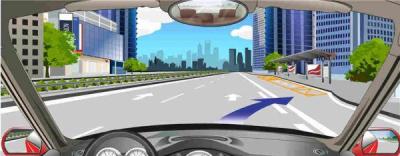
Answer:N
15、When approaching the turning point of a road, in which of the following ways will motor vehicle drivers easily cause a traffic accident?
A、Driving ahead by occupying the opposite lane
B、Turning the steering wheel quickly when passing through the curve
C、Not reducing speed until driving onto the curve
D、Driving by the right side
Answer:ABC
16、When finding a tire burst on the road, the driver should use emergency braking while controlling the direction of the vehicle at the same time to stop the vehicle qulckly.
Answer:N
17、As shown in the flash, what should the motor vehicle driver do when encountering this situation?

A、Reserve a safe crosswise distance and cut speed
B、Keep a normal speed
C、Use the emergency brake when approaching
D、Speed up and pass rapidly
Answer:A
18、The broken white line rectangle area on the right side of the road indicates that long stopping is permitted here.

Answer:N
19、When driving on an expressway, which of the following statements is correct?
A、Drives may overtake on either the ramp, the acceleration lane or the deceleration lane
B、Drives are prohibited from reversing, driving in the opposite direction or making a U turn by crossing the central dividing strip
C、Drivers may drive on the emergency lane in a non-emergency case
D、Drives may test a motor vehicle or learn to drive
Answer:B
20、When there is a sudden braking failure on a downhill road, what should be done by the driver?
A、Driving to an emergency lane and reducing speed to stop
B、Dropping the gear by two positions
C、Changing to the reverse gear to force the vehicle to stop
D、Reducing speed by pulling up the handbrake
Answer:A
21、Under such circumstances, the motor vehicle driver should voluntarily reduce speed and let the vehicle behind overtake.

Answer:Y
22、When parking temporarily in this situation, motor vehicle drivers are allowed to turn the steering wheel right to avoid sliding.

Answer:Y
23、When a motor vehicle encounters thick fog on an expressway and the visibility is poor, the driver should immediately brake and stop.
Answer:N
24、When a motor vehicle passes over an inundated road, what should the driver do for safe driving?
A、Slow down and drive with special care
B、Speed up and pass rapidly
C、Maintain a normal speed and pass through
D、Change to a low gear and speed up to pass
Answer:A
25、The guide arrow on the road surface of this lane indicates that only U-turns are permitted at the intersection ahead.

Answer:N
26、When driving on a foggy day, the driver should turn on the fog lamp.
Answer:Y
27、How many kinds of law-breaking acts are displayed in flash 5?

A、One
B、Two
C、Three
D、Four
Answer:C
28、When driving on an expressway in rain, the driver should slow down to avoid steering failure arising from "water slide"
Answer:Y
29、The sign on the right warns for children on the section ahead.

Answer:Y
30、Under such circumstances, what should be done by motor vehicle drivers in order to maintain safe driving?

A、Sound the horn or turn on the headlamps
B、Reduce speed or drive on the right side
C、Keep to the central line as best as possible
D、Drive on the left side of the road
Answer:B
31、What's the meaning of the sign on the right?

A、Long-time parking permitted
B、Temporary parking permitted
C、Long waiting for passengers permitted
D、No parking
Answer:B
32、When passing another vehicle on a foggy day, what should drivers do?
A、Slow down and pass slowly
B、Maintain a safety distance
C、Properly use lamps
D、Drive at a high speed
Answer:ABC
33、The diamond-shaped sign on the road indicates a crosswalk on the road ahead.

Answer:Y
34、What kind of harmful effect will be brought about by continuously using the foot brake on a long downhill road?
A、Shorten the engine's service life
B、Make the driver feel tired
C、Easily cause the vehicle to overturn
D、Reduce the braking efficiency
Answer:D
35、The guide arrow on the road surface of this lane indicates that only left turns are permitted at the intersection ahead.

Answer:Y
36、When leaving an expressway, drivers should enter the ramp after slowing down in the deceleration lane.
Answer:Y
37、When driving in rain or snow, the driver should turn left to stabilize the vehicle if the motor vehicle slides to the right side.
Answer:N
38、The sign in front indicates a one-way lane after turning left.

Answer:Y
39、The sign on the right indicates an emergency shield 100 meters ahead.

Answer:Y
40、The signs on each side warn of changes in road alignment ahead.

Answer:Y
41、This sign indicates the traffic broadcast and radio television channel of highway.

Answer:N
42、How many kinds of law-breaking acts are displayed in flash 4?

A、One
B、Two
C、Three
D、Four
Answer:C
43、What needs attention when a motor vehicle drives on a road covered with ice and snow?
A、Braking length is extended
B、Anti-skating resistance will be greater
C、The adhesive force of the road will be greater
D、The braking length will be shorter
Answer:A
44、When a tire suddenly bursts on the road, the driver should violently depress the brake pedal to reduce speed and stop the vehicle.
Answer:N
45、What is the function of ABS during emergency braking?
A、Shortening the braking distance
B、Keeping steering capacity of the motor vehicle
C、Relief the braking inertia
D、Controlling directions automatically
Answer:B
46、The sign on the left warns of no passing on the right-hand road ahead.

Answer:N
47、How many kinds of law-breaking acts are displayed in flash 1?

A、One
B、Two
C、Three
D、Four
Answer:B
48、The cross-hatched marking indicates an area where vehicle drivers are not allowed to stop.

Answer:Y
49、When a motor vehicle needs to stop for inspection after having an accident on an expressway, where should the driver park?
A、On the far outer lane
B、On the inner lane
C、On the emergency lane
D、In the triangle area on the ramp
Answer:C
50、When there is a braking failure on a downhill road, if there is no other alternative, the driver may rub the vehicle body against the rocks and trees on roadside to force the vehicle to slow down and stop.
Answer:Y
- 广西驾照科目四英文版题库 相关内容
- 黑龙江驾考英语版题库book 老外考驾照的理论考题是什么题 湖北英文驾考科目四题库PDF电子版 江苏英文版考驾照 青海外国人考科目四 英文 江苏英语c1考试 新疆驾考科目四英语版书 湖北驾照科目一英文版题库 江苏驾考科目一英语版PDF题库 宁夏驾考有英文版吗 辽宁考驾照的英文单词 辽宁科目四考题英文版 西藏英文考驾照用语 河北驾考科目三英文 北京驾照考试科目一英文版 老外考中国驾照难吗
Copyright © 2025 驾考 版权所有