
- 科目一考试
- 顺序练习
- 随机练习
- 强化练习
- 模拟考试
- 科目四考试
- 顺序练习
- 随机练习
- 强化练习
- 模拟考试
- 外国语言版题库
- 英语题库
- 德语题库
- 韩语题库
- 日语题库
- 俄语题库
- 法语题库
- 西班牙语题库
- 阿拉伯语题库
- 摩托车英文题
河北2025科目四考试英文
-
1、What influence does smoking have upon driving?
A、Harmful for safe driving
B、Increase concentration
C、Help relaxation
D、No effect on driving
Answer:A
2、Under such circumstance at an intersection. motor vehicle drivers should be prepared to stop and yieldat any time.

Answer:Y
3、The driver may turn right directly at this intersection.

Answer:N
4、When a motor vehicle encounters thick fog on an expressway and the visibility is poor, the driver should immediately brake and stop.
Answer:N
5、When there is a braking failure, the driver should first control the direction and then try to control the speed.
Answer:Y
6、Under this circumstance, motor vehicle drivers should give the right of way to oncoming vehicle.

Answer:Y
7、The sign on the right indicates that no restriction for temporary parking.

Answer:N
8、The sign on the right side warns of crosswind on the mountain pass ahead.

Answer:Y
9、Drivers may turn right at the intersection when traffic police give these hand signals.

Answer:Y
10、When such circumstances happen suddenly, drivers should reduce speed in a timely fashion or stop to yield.

Answer:Y
11、After setting off from a roadside, motor vehicle drivers should watch both sides of the road, turn left and drive into the normal lane slowly.
Answer:Y
12、The sign on the left indicates U-turn is allowed here.

Answer:Y
13、Motor vehicle drivers are allowed to overtake as long as there are no oncoming vehicles.

Answer:N
14、When carrying a wounded person in a coma, rescue personnel should try to let the unconscious person remain in the supine position.
Answer:N
15、Mr. Qi drove a large bus with 28 passengers(capacit 55 people). When arriving at an intersection without any traffic signals from south to north at a speed of 50 kilometers per hour, the bus had a side collision with Mr. Li's heavy semi-trailer tractor (capacity 40 tons and carrying 55.2 tons) running from east to west. As a result of this accident, 12 people were killed and 17 injured. What are the main illegal acts in this case?
A、The bus carried more passengers than capacity
B、The bus exceeded the speed limit
C、The tractor carried more cargo than capacity
D、The driver of the tractor was inexperienced
Answer:BC
16、The sign on the right warns for children on the section ahead.

Answer:Y
17、Mr. Yang drove an adapted minibus( capacity 9 people and carrying 64 passengers, including 62 kindergarten pupils). When driving in Ma Caogou Village of Yu Linzi County, the bus used the lane for oncoming traffic and had a head-on colision with a heavy dump truck. As a result of this accident, 22 people were killed and 44 injured. What are the main illegal acts in this case?
A、The truck exceeded the speed limit
B、Illegal adaptation of a motor vehicle
C、The minibus carried more passengers than capacity
D、Driving in the opposite direction lane
Answer:BCD
18、Mr. Qian drove a large sleeper coach with 45 passengers (capacity 40 people) at a speed of more than 40 kilometers per hour. On a long slope with sharp curves in Basu County, the coach fell into a 100-meter-deep valley, killing 17 people and injuring 20. What's the main illegal act committed by MrQian?
A、Making a cellphone call while driving
B、Speeding
C、Carrying more people than permitted
D、Fatigued driving
Answer:BC
19、In which of the following ways can motor vehicles avoid a tire burst?
A、Lowering tire pressure
B、Checking tires regularly
C、Removing foreign matters from the tire tread grooves timely
D、Replacing the tires that have cracks or deep cuts
Answer:BCD
20、In the condition of low visibility, drivers should turn on the low-beam when setting off

Answer:Y
21、The driver may not change lanes when the motor vehicle turns right at this intersection.

Answer:N
22、When a motor vehicle catches fire, the driver should swiftly turn off the engine and open the hood to extinguish the fire.
Answer:N
23、The sign on the right indicates that the speed limit of 40km/hour is lifted on the road ahead.

Answer:Y
24、When there is a braking failure on a downhill road the driver should change the gear to one position or two positions lower, and control the speed by taking advantage of the braking role of the engine.
Answer:Y
25、When the electric equipment and gasoline of a motor vehicle catches fire, the driver may extinguish the fire with water.
Answer:N
26、The solid yellow line on the curb indicates that temporary stopping or parking is allowed at the roadside.

Answer:N
27、The sign on the right indicates a bypass flow intersection ahead.

Answer:N
28、The sign on the right indicates a 200-meter distance from the gas station ahead.

Answer:Y
29、The sign on the left indicates that drivers should stop to take a pass card at the toll station ahead.

Answer:Y
30、Which one of the following statements is the safest measure for a motor vehicle driver to take on this kind of road?

A、Accelerate to overtake the vehicle in front as soon as possible
B、Sound the horn to warn the vehicle in front to vield
C、Follow the vehicle in front and keep a certain distance
D、Overtake the vehicle in front from its righthand
Answer:C
31、When driving in rain or snow, the driver should turn left to stabilize the vehicle if the motor vehicle slides to the right side.
Answer:N
32、Motor vehicle drivers may make a U-turn in the broken line area as long as it will not affect the normal traffic flow.

Answer:Y
33、When the vehicle behind gives a notice of overtaking at night, the vehicle in front should not yield blindly.

Answer:Y
34、How should the driver use vehicle lights when the motor vehicle leaves a roundabout?

A、Turn on the left-turn indicator
B、Turn on the hazard lamps
C、No need to turn on any indicators
D、Turn on the right-turn indicator
Answer:D
35、Mr. Zhao (with an A2 driving license) drove a large sleeper coach on the No. 219 National Road in Yecheng County. When passing a curve at the spot of 226 kilometers mark by 215 meters on the road, the coach fell into the ravine on one side, killing16 people and injuring 26. What's the main illegal act committed by Mr Zhao?
A、Carrying more passengers than permitted
B、Driving a motor vehicle having failed to accept inspection in time
C、Driving an unpermitted vehicle type
D、Fatigued driving
Answer:C
36、What should the driver do when seeing these hand signals?

A、Go straight and pass through the intersection
B、Stop and wait
C、Turn right at the intersection
D、Turn left at the intersection
Answer:B
37、The sign in front indicates a one-kilometer distance from the next left exit.

Answer:N
38、What caused this drivers death in an accident?

A、Failing to fasten seatbelt
B、Positioned too close to the steering wheel
C、Failing to hold the steering wheel
D、Failing to turn on SRS
Answer:A
39、The area in the yellow rectangle markings on the right side of the road indicates that temporary stopping is permitted here.
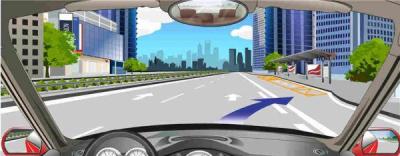
Answer:N
40、The sign on the right side warns of an abrupt downhill section ahead.

Answer:N
41、This sign indicates that vehicles can either drive straight or turn right at the fly-over junction ahead.

Answer:N
42、The guide arrow on the road surface of this lane indicates that U-turns and left turns are permitted at the intersection ahead.

Answer:Y
43、The driver should take emergency evasion measures when the motor vehicle suddenly self-ignites. Which ones of the following methods are correct?
A、Spray clean water to extinguish the fire
B、Report to the police
C、Use the spare fire extinguisher in the vehicle to put out the fire
D、Set up a warning sign in the oncoming direction
Answer:BCD
44、Which one of the following is the safest way when driving a motor vehicle on this road?

A、Cutting speed or stopping to yield
B、Driving along the center of the road
C、Keeping a normal speed
D、Approaching vehicles by taking the opposite lane
Answer:A
45、Motor vehicle drivers are allowed to overtake on this road section.

Answer:N
46、The driver should turn left by the left side of the intersection central point.

Answer:Y
47、The sign on the right indicates a one-kilometer distance from ETC toll station ahead.

Answer:N
48、Which one of the following ways to pass this intersection is correct?

A、Turn left or right
B、Drive straight or turn left
C、Turn left
D、Drive straight or turn right
Answer:D
49、When a vehicle encounters a strong side wind, the driver should firmly hold the steering wheel and press the brake urgently if he feels the vehicle deviates horizontally from the normal direction.
Answer:N
50、When there is no bandage for rescuing a wounded person, towels, handkerchiefs, bed sheets and stockings can all be used for dressing.
Answer:Y
- 河北2025科目四考试英文 相关内容
- 湖南驾考科目四英语 湖南2025英文驾考PDF题库 吉林科目一考试英文版 黑龙江考驾照的英文单词 从国外学的驾照在国内可以换吗? 福建2025驾考英文题库 山西驾考科目一英文版题库 湖南英文考驾照用语 山西科目一有英文版吗 河北英文版考驾照 北京外国人考驾照科目四 广东驾照科目四英文版题库 重庆只认识英文可以考科目一吗 老外考驾照的理论考题是什么样的啊 内蒙古科目四英文版模拟 辽宁驾考英文版题库
Copyright © 2025 驾考 版权所有