
- 科目一考试
- 顺序练习
- 随机练习
- 强化练习
- 模拟考试
- 科目四考试
- 顺序练习
- 随机练习
- 强化练习
- 模拟考试
- 外国语言版题库
- 英语题库
- 德语题库
- 韩语题库
- 日语题库
- 俄语题库
- 法语题库
- 西班牙语题库
- 阿拉伯语题库
- 摩托车英文题
湖南只认识英文可以考科目四吗
-
1、When a collision occurs on the passenger seat side or the impact is relatively small, which of the following methods is incorrect?
A、Firmly holding the steering wheel
B、Stretching both feet forward
C、Jumping out of the vehicle from one side
D、Leaning body backwards against the seat
Answer:C
2、The driver may not change lanes when the motor vehicle turns right at this intersection.

Answer:N
3、When a wounded person suffering bone fracture in the thigh, shank or spine, moving the wounded person is usually prohibited.
Answer:Y
4、The distance-ascertaining section of an expressway is used for the drivers to ascertain the safety distance when the speed is 100 kilometers per hour.

Answer:Y
5、The driver should turn left by the left side of the intersection central point.

Answer:Y
6、What should motor vehicle drivers do when parking temporarily on a rainy day?
A、Turn on hazard lamp
B、Turn on front and back fog lamp
C、Turn on low-beam
D、Set up warning sign at the back of the vehicle
Answer:A
7、When the wounded person is suffering main artery bleeding, where should the rescue personnel press by thumb to stop the bleeding?
A、The artery near the heart
B、The artery lower to the wound
C、The artery further from the heart
D、The artery in the center of the wound
Answer:A
8、The marking on the road surface indicates that the speed limit of this road section is 50 km/hour.

Answer:Y
9、Under such circumstances, what should motor vehicle drivers do?

A、Overtake the vehicle quickly on its left
B、Keep a long braking space
C、Continuously sound the horn to alert the vehicle in front
D、Overtake the vehicle quickly from its right
Answer:B
10、The area in the yellow rectangle markings on the right side of the road indicates that temporary stopping is permitted here.
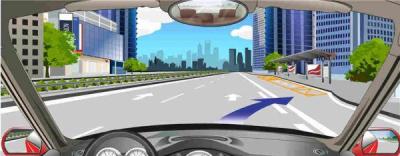
Answer:N
11、The guide arrow on the road surface of this lane indicates that U-turns and left turns are permitted at the intersection ahead.

Answer:Y
12、The sign on the right indicates a 2-kilometer distance from the Donglushan Service Area on the highway.

Answer:Y
13、When driving on this dangerous mountainside road, motor vehicles should drive along the right side of the road.

Answer:Y
14、Under such circumstances at an intersection. what should motor vehicle drivers do?

A、Drive into the intersection and wait
B、Wait in front of the intersection stop-line
C、Pass through in the right non-motor vehicle lane
D、Pass through the intersection by borrowing the opposite lane
Answer:B
15、After a motor vehicle enters the ramp from an expressway, it should reduce its speed below the prescribed speed limit.
Answer:Y
16、When driving on an expressway which of the following statements is correct?
A、Drivers may stop to pick up or drop off passengers in the emergency lane
B、Drives may load or unload cargo in the emergency lane
C、Drives may overtake other vehicles or stop in the deceleration or acceleration lane
D、Drives are prohibited from driving or stopping in the emergency lane in a non-emergency case
Answer:D
17、Sounding the horn on a foggy daY can arouse the attention of the opposite side. After hearing the horn from the opposite side, the driver should also sound their own horn to respond.
Answer:Y
18、Which lamp should be used when motor vehicles pass hrough an intersection at night where there is no traffic light signal?
A、High-beam
B、Low-beam
C、Hazard lamps
D、High-beam and low-beam should be used alternatively
Answer:D
19、The sign in the red circle indicates that vehicles except non-motor vehicles are not allowed to drive in this lane.

Answer:Y
20、Motor vehicles are permitted to move to the right lane at this intersection.
Answer:N
21、When driving on the highway in foggy, rainy, or snowy weather with a range of visibility between 100 meters and 200 meters, what should motor vehicle drivers do?
A、Turn on the fog lamp, low-beam, clearance lamp and front and rear position lamp
B、Drive at a speed of no more than 60 km/hour
C、Keep a breaking distance of more than 100 meters from the vehicle in front in the same lane
D、Leave the highway from the nearest exit as soon as possible
Answer:ABC
22、What does this sign on the fly-over junction indicate?

A、Turn right
B、Drive straight or turn left
C、Drive straight or turn right
D、Take a U-turn under bridge
Answer:B
23、When a motor vehicle encounters an emergency on an expressway, the driver should not swiftly turn the steering wheel to evade.
Answer:Y
24、What should the driver do upon finding a burst rear tire?
A、Adjust by swiftly turning the steering wheel
B、Control the direction while reducing speed slowly
C、Swiftly turn the steering wheel to the opposi direction
D、Swiftly take braking measures
Answer:B
25、After a traffic accident, what is the most effective measure to prevent secondary accidents?
A、Evacuate all passengers
B、Turn on the hazard lamps
C、Mark the original place of the injured persons
D、Properly place the danger warning sign
Answer:ABD
26、When a motor vehicle passes over an inundated road, what should the driver do for safe driving?
A、Slow down and drive with special care
B、Speed up and pass rapidly
C、Maintain a normal speed and pass through
D、Change to a low gear and speed up to pass
Answer:A
27、The sign on the right warns of a guarded railway intersection ahead.

Answer:N
28、The driver should yield to other non-motor vehicles when the motor vehicle turns right at this Intersection.

Answer:Y
29、The sign on the right warns that there are vehicles converging into the intersection on the right.

Answer:Y
30、What should be given attention when setting off in this weather?

A、Turning on the high-beam
B、Turning on the front and rear fog lamps
C、Turning on the left indicator only
D、Continuously sounding the horn
Answer:B
31、The cross-hatched marking indicates an area where vehicle drivers are not allowed to stop.

Answer:Y
32、What should motor vehicle drivers do under such circumstances at night?

A、Turn off the headlamp when approaching
B、Use low-beam
C、Use high-beam
D、Turn off all lamps in advance
Answer:B
33、The sign on the right indicates that the speed limit of 40km/hour is lifted on the road ahead.

Answer:Y
34、The sign on the right indicates a bypass route at the intersection ahead.

Answer:Y
35、After a motor vehicle falls into water, the driver won't be able to open the side doors or windows to escape until water nearly fills up the compartment.
Answer:Y
36、The driver should pay attention to the left side when the motor vehicle passes this intersection.

Answer:N
37、The sign on the right side indicates that turning left is not permitted at the intersection ahead.

Answer:Y
38、A correct measure to avoid tire burst of motor vehicles is to lower the tire pressure.
Answer:N
39、In which ones of the following ways can motor vehicle drivers effectively prevent braking failure?
A、Maintaining the braking system periodically
B、Checking the free brake pedal travel before driving
C、Using the braking system correctly to avoid brake-fade
D、For vehicles with hydraulic braking system, checking if the brake fluid leaks before driving
Answer:ABCD
40、When parking for a long time on an upward slope due to breakdown on the road, drivers should use this method to stop up wheels.

Answer:N
41、Mr. Shi drove a low-speed cargo vehicle (capacity 1.2 tons)with 4.05 tons of cargo. At the spot of 51 kilometers mark by 260 meters on the No. 314 County Road in Ningjin County, the cargo vehicle had a head-on collision with a normally running midsize bus( capacity 11 people and carrying12) from the opposite direction after passing the central line of the road and overtaking the front vehicle in the same direction. As a result of this accident, 10 people were killed and 2 injured. What are the illegal acts in this case?
A、The cargo vehicle carried more cargo than capacity
B、The cargo vehicle illegally overtook other vehicles
C、The bus carried more passengers than capacit
D、The driver of the bus kept driving when tired
Answer:ABC
42、When encountering this situation, which of the following is the correct way to overtake other vehicles?

A、Turn on high-beam
B、Use high-beam and low-beam alternatively
C、Turn on low-beam
D、Turning on hazard lamp
Answer:D
43、When a motor vehicle turns left at this intersection the driver should change to the left lane in advance by the guide arrow.
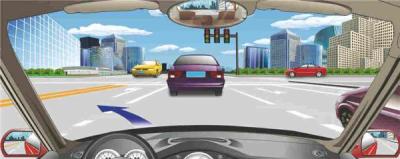
Answer:Y
44、When a motor vehicle catches fire on the expressway the driver should drive the motor vehicle to the service area or the parking lot to extinguish the fire.
Answer:N
45、As shown in this picture, the intersection guide line is designed to help drivers make turns.

Answer:Y
46、Motor vehicle drivers may reverse at an intersection.
Answer:N
47、What should the driver do if he/she wants to turn left at this intersection?

A、Turn left along the straight-going lane
B、Enter the left turn waiting area
C、Enter the straight-moving waiting area
D、Turn left along the left lane
Answer:B
48、When parking temporarily in this situation, motor vehicle drivers are allowed to turn the steering wheel right to avoid sliding.

Answer:Y
49、When driving on a foggy day, the driver should turn on the fog lamp.
Answer:Y
50、When a motor vehicle passes over an inundated road what should the driver do?
A、Stop and look at the situation
B、Make sure it's safe and pass over at a low speed
C、Intermittently and gently depress the brake pedal then wading across the water
D、Continuously but gently depress the brake pedal then wading across the water
Answer:ABC
- 湖南只认识英文可以考科目四吗 相关内容
- 科目四英文版练习题库 广东驾考科目四英语版PDF 安徽驾照科目四英文版题库 内蒙古只认识英文可以考科目四吗 外国人驾照考试题库有哪些软件好 浙江科目一考试英文版 江苏英文版驾考 重庆英文驾考书 河北驾考英文版题库 吉林驾考英语版PDF题库 老外驾考电脑版下载 河北英文版考驾照 老外考驾照需要准备什么东西和材料 江西英文版考驾照 云南英语c1考试 宁夏英文驾考app
Copyright © 2025 驾考 版权所有